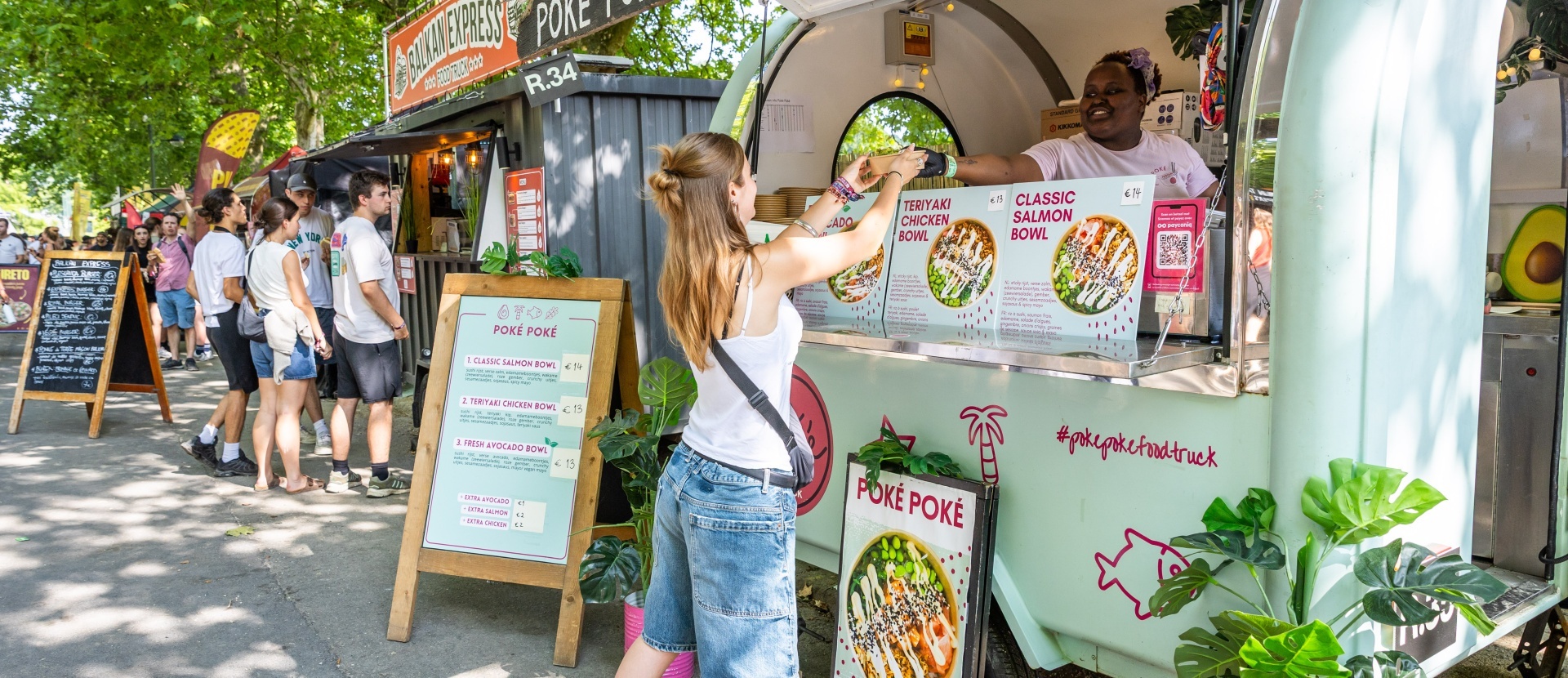
Food and sustainability
At Couleur Café, our mission is clear: to treat our festivalgoers' taste buds to delicious and sustainable culinary experiences! We take you on a journey through exotic flavors and unique dishes, striving to do good for both our guests and the planet. Local, sustainable, eco-friendly? Yes, please!
That’s why we opt for:
- An abundance of varied cuisines, with over 50% of the available dishes being vegetarian!
- Local and organic products, because good food also means thinking carefully about your choices
- A strict ban on beef and products transported by air
- Biodegradable plates, cups, and cutlery
- Sorting: a joint effort, for both visitors and foodstands.
Why install a ban on beef?
Animal-based products generally have a larger ecological footprint than plant-based alternatives, that’s one thing we know for sure. However, within the product group, there are significant differences to be discovered. One item stands out: beef is by far the most polluting type of meat, because cattle consume enormous amounts of resources while also producing immense emissions. During production, beef emissions are approximately three times higher than those of dairy products and eight to ten times higher than those of lower-impact meats like poultry and pork.
Simply replacing beef with pork, poultry, or plant-based alternatives thus already has an immense impact on your ecological footprint, and therefore also on the one of the festival! And believe us, with the delicious options we’ve got in store, you won't miss it for a second.
Why eat local?
Next to the type of products you eat, the way they are transported also has a significant impact on your ecological footprint. Food transport accounts for 10 to 20 percent of the total emissions of the food chain. That’s why we encourage stallholders to source their ingredients mindfully: they partner up with at least two local suppliers and focus on using seasonal products as much as possible.
Furthermore, the use of products imported by air is strictly prohibited. It’s not a secret that flying is far from environmentally friendly: air transport is by far the most polluting form of food transport. For example, products imported by air emit 50 (!) times more CO2 than their counterparts traveling by boat.
BOnanza Café
For our own Bonanza Café, we go a step further: the kitchen team cooks with ingredients of which more than 90% have been saved from store shelves before they would end up in the bin. To achieve this, we collaborate with various Brussels partners who are strongly committed to sustainability. Want to know more about Bonanza Café? You can find everything right here.